
AMSAT News Service
ANS-116
April 26, 2026
In this edition:
* AMSAT Update from 2026 CubeSat Developers Workshop Available Online
* AMSAT-HB Announces Results of 2026 HB9RG Trophy Distance Competition
* Rocket Lab Launches Eight JAXA Satellites on Kakushin Rising Mission
* KrakenRF Discovery Drive Rotator Campaign Exceeds $314k Funding Goal
* Changes to AMSAT TLE Distribution for April 24, 2026
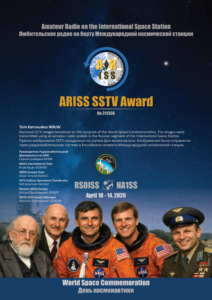
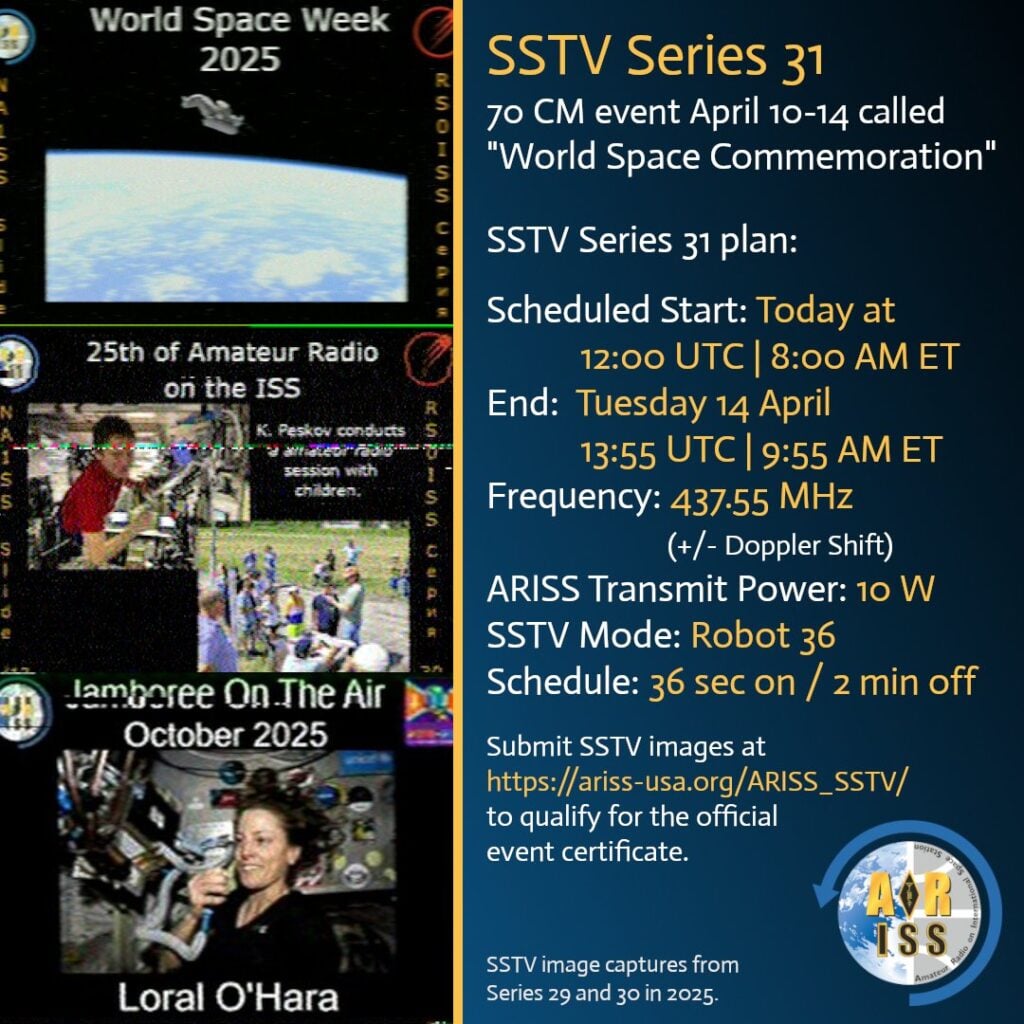
* ARISS News
* AMSAT Ambassador Activities
* Satellite Shorts From All Over
The AMSAT® News Service bulletins are a free, weekly news and information service of AMSAT, The Radio Amateur Satellite Corporation. ANS publishes news related to Amateur Radio in Space including reports on the activities of a worldwide group of Amateur Radio operators who share an active interest in designing, building, launching and communicating through analog and digital Amateur Radio satellites.
The news feed on https://www.amsat.org publishes news of Amateur Radio in Space as soon as our volunteers can post it.
Please send any amateur satellite news or reports to: ans-editor [at] amsat.org
You can sign up for free e-mail delivery of the AMSAT News Service Bulletins via the ANS List; to join this list see: https://mailman.amsat.org/postorius/lists/ans.amsat.org/
AMSAT Update Presented at 2026 CubeSat Developers Workshop Available Online
An update presented by AMSAT President Drew Glasbrenner, KO4MA, at the 2026 CubeSat Developers Workshop is now available for viewing on YouTube. The presentation provides an overview of AMSAT’s current satellite development programs and future mission plans, along with its ongoing efforts to support amateur radio in space. The recorded session offers those unable to attend the workshop an opportunity to review AMSAT’s activities within the broader small satellite community.
The CubeSat Developers Workshop, held April 14–16, 2026, at California Polytechnic State University in San Luis Obispo, California, is an annual three-day conference focused on small satellite development. Now in its 23rd year, the workshop brings together participants from academia, industry, and government to share knowledge, research, and practical experience in CubeSat missions, with an emphasis on hands-on learning and collaboration.
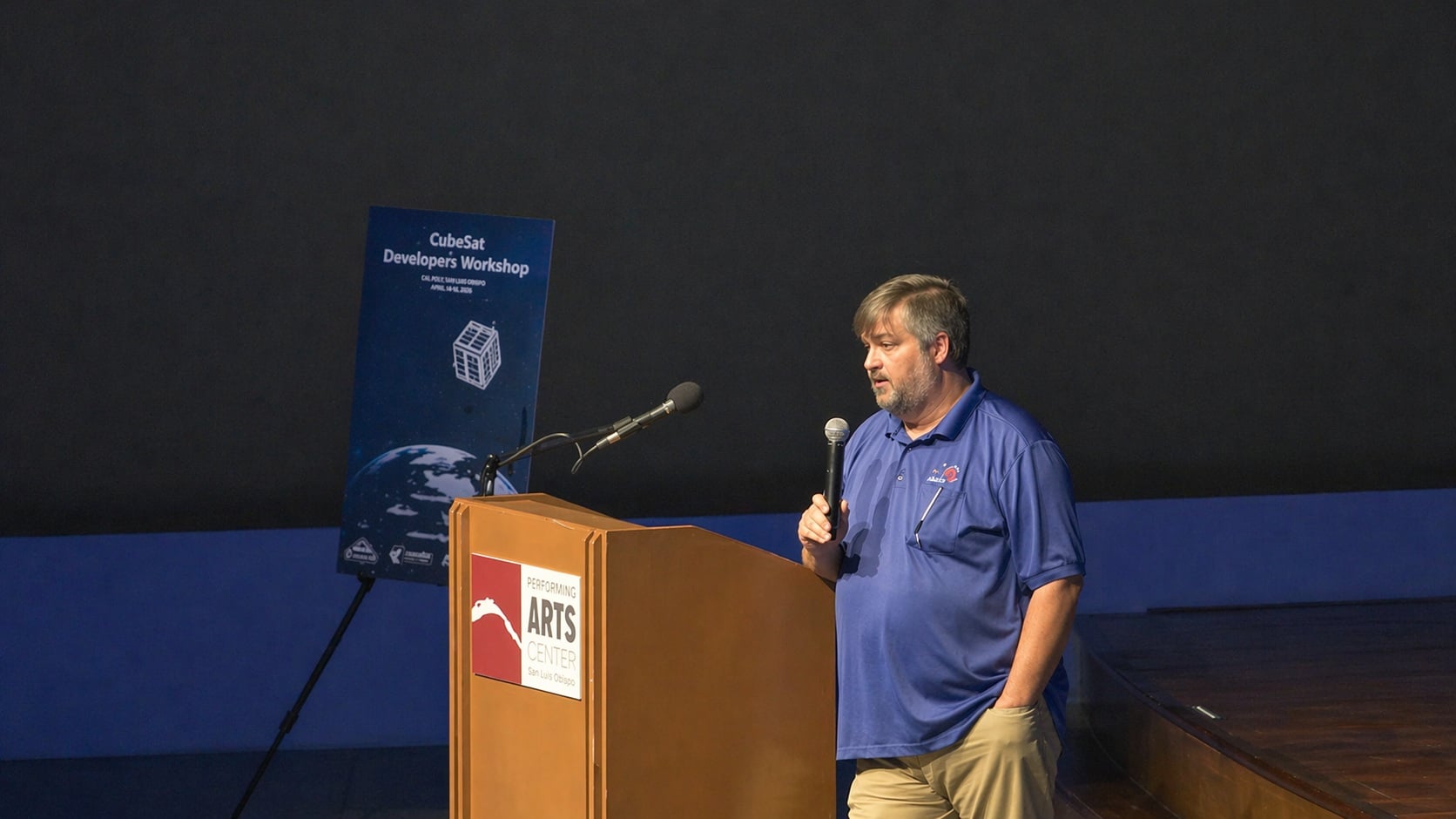
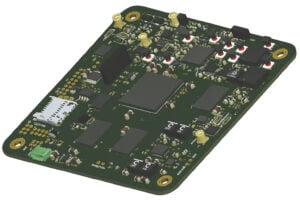
Glasbrenner then outlined AMSAT’s current satellite development efforts, focusing on the GOLF-TEE mission, a 3U CubeSat expected to be completed later this year or early next year. The satellite is designed to carry a 30 kHz linear transponder for amateur communications, along with a 10 GHz high-speed experimental downlink and improved three-axis attitude control. He also described the follow-on Fox-Plus series of CubeSats, which incorporate a mix of commercial hardware and AMSAT-developed radio payloads.
Additional work includes AMSAT’s development of linear transponder modules and other payloads designed for integration into university CubeSat missions. These systems allow partner institutions to use the hardware for mission communications while also providing access to amateur radio operators when not in use. Glasbrenner also highlighted educational initiatives such as the CubeSat Simulator and youth outreach programs aimed at expanding student participation in amateur satellite operations.
The full presentation can be viewed on YouTube at: https://www.youtube.com/live/p5GHRMOr8tk
[ANS thanks Drew Glasbrenner, KO4MA, AMSAT President, and the CubeSat Developers Workshop for the above information]
AMSAT-HB Announces Results of 2026 HB9RG Trophy Distance Competition
AMSAT-HB has released the results of the 2026 HB9RG Trophy Distance competition, held during the first two weeks of March to honor the legacy of Hans Rudolf Lauber, HB9RG, a pioneer in VHF and UHF communications and early satellite experimentation. The event challenges operators to achieve the greatest possible distances using amateur satellites in Earth orbit. Unlike traditional contests, scoring is based on the sum of each participant’s ten longest satellite QSOs rather than the total number of contacts. This format emphasizes technical skill, station optimization, and operating strategy. The results shown in the table reflect the combined distance of those ten longest contacts for each operator. The 2026 competition drew participants from multiple countries across three operating categories.
Category 1, designed for portable handheld stations using whip or telescopic antennas, had a single participant, DF2ET, who achieved a total distance of 8,920.65 kilometers (5,542.43 miles). The operator recorded a maximum single contact of 1,843.41 kilometers (1,145.19 miles) between grid JO31 and KN56. In Category 2, which includes portable and more capable stations, KE9AJ placed first with a total distance of 71,581.90 kilometers (44,472.62 miles), followed by VU3YFD and VA3VGR. The longest single contact in this category measured 7,480.98 kilometers (4,648.52 miles) between KE9AJ in EL99 and F4AZF in JN39 via AO-7. KE9AJ also recorded the highest average distance at 7,158 kilometers (4,447.30 miles). Category 2 drew ten participants from seven countries.
| Category | Rank | Call | Distance (kilometers) | Distance (miles) |
|---|---|---|---|---|
| Portable Whip/Telescope | 1 | DF2ET | 8920.65 | 5542.43 |
| Portable Stations | 1 | KE9AJ | 71581.90 | 44472.62 |
| 2 | VU3YFD | 42783.01 | 26584.98 | |
| 3 | VA3VGR | 39565.91 | 24584.35 | |
| 4 | M5JFS | 33729.30 | 20957.59 | |
| 5 | ER1KW | 24384.47 | 15152.51 | |
| 6 | YC8RPK | 20475.35 | 12722.06 | |
| 7 | YD9IPB | 17098.10 | 10624.07 | |
| 8 | DG7RO | 13330.27 | 8282.03 | |
| 9 | DF2ET | 11818.67 | 7343.52 | |
| 10 | R2SCN | 3562.93 | 2213.98 | |
| Fixed Stations | 1 | PA3GAN | 66405.74 | 41262.68 |
| 2 | DL4KCA | 38062.50 | 23650.48 | |
| 3 | F0GOW | 35609.15 | 22126.03 | |
| 4 | F6KRK | 28737.33 | 17856.45 | |
| 5 | F1EFW | 28356.55 | 17619.88 |
In Category 3 for fixed stations, PA3GAN placed first with a total distance of 66,405.74 kilometers (41,262.68 miles), followed by DL4KCA and F0GOW. The longest single contact reached 7,177.64 kilometers (4,459.41 miles) between PA3GAN in JO21 and KE9AJ in EL99 via AO-7. Five participants from three countries competed in this category. Results demonstrate the performance advantage of fixed stations while still requiring strong operating skill. The category showed consistent long-distance capability across multiple operators. Results highlight that both portable and fixed stations can achieve strong performance when combined with effective operating strategy.
Across all categories, the results highlight the continued importance of linear transponder satellites such as AO-7, FO-29, and RS-44 for long-distance QSOs. These platforms enabled many of the longest contacts recorded during the event. Operators demonstrated strong understanding of satellite passes, polarization effects, and station configuration. The competition also reinforced the value of portable operation in achieving unique grid combinations. Overall participation reflects a technically engaged satellite community. The HB9RG Trophy remains a meaningful tribute to early satellite communication achievements while encouraging continued innovation and participation in amateur satellite operations.
Official 2026 HB9RG Trophy Results: https://www.amsat-hb.org/hb9rg_trophy/hb9rg_trophy_2026/result_2026
[ANS thanks AMSAT-HB for the above information]
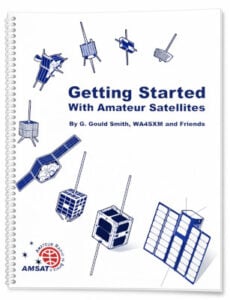
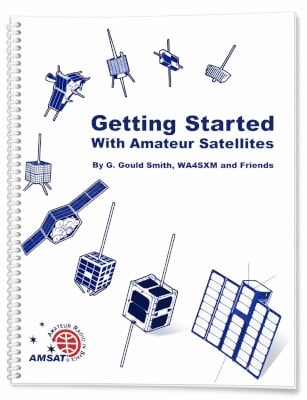
Written by experienced AMSAT satellite operators, Getting Started With Amateur Satellites is a complete guide to working amateur satellites, covering tracking, antennas, radio selection, and step-by-step operation for FM, SSB, and digital modes.
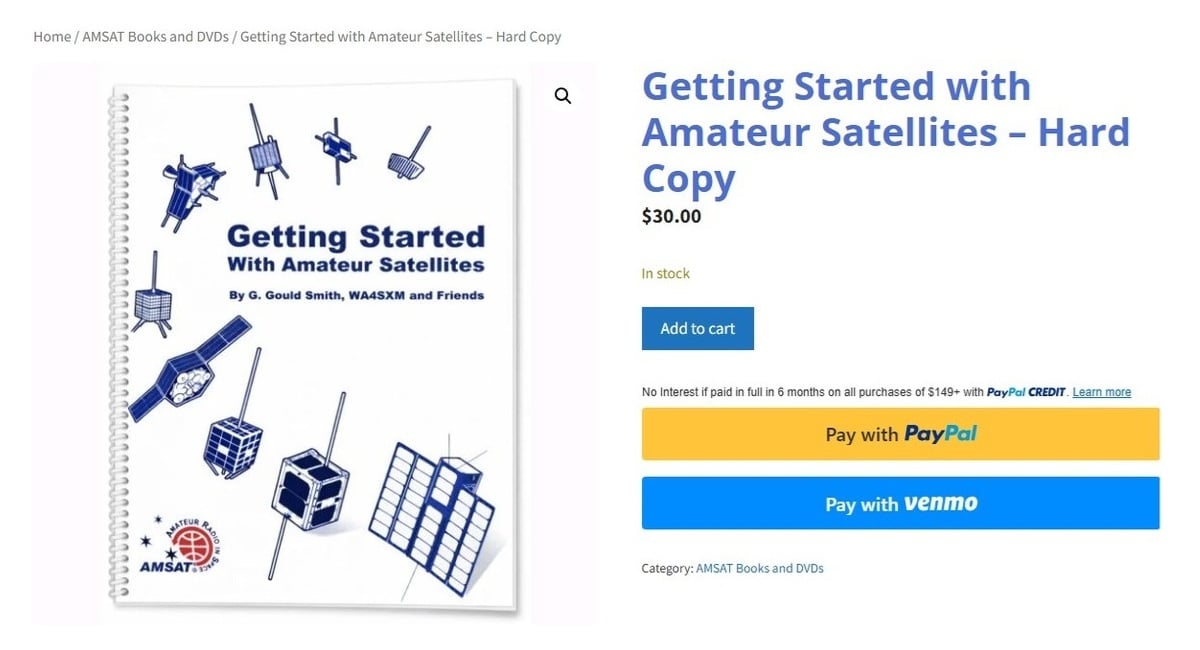 Join or renew your AMSAT membership and download a free PDF copy for a limited time
https://www.amsat.org/membership-specials/
Or purchase the digital download or printed copy from the AMSAT Store
https://www.amsat.org/product-category/amsat-books-and-dvds/
Rocket Lab Launches Eight JAXA Satellites on Kakushin Rising Mission
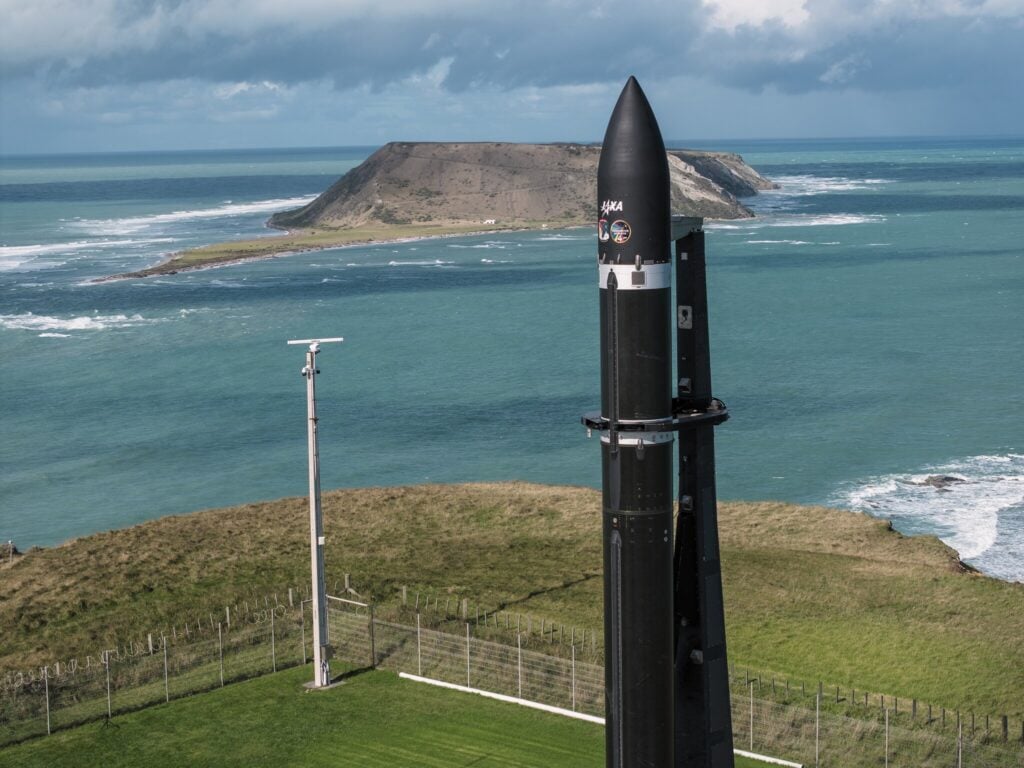
Rocket Lab successfully launched eight satellites for Japan late Wednesday night as part of its Kakushin Rising mission, supporting the Japan Aerospace Exploration Agency’s Innovative Satellite Technology Demonstration Program. Liftoff occurred at 11:09 PM EDT Wednesday, April 22 (0309 UTC Thursday, April 23) from Rocket Lab’s Launch Complex 1 in New Zealand. The mission carried a diverse set of small satellites designed to test new technologies and expand capabilities in low Earth orbit. The launch continues Rocket Lab’s steady cadence of dedicated smallsat missions.
The Electron rocket deployed all eight spacecraft into low Earth orbit at an altitude of approximately 336 miles (540 kilometers). Deployment occurred less than one hour after liftoff, in line with mission expectations. Rocket Lab confirmed successful separation of all payloads shortly after the event. The mission marked the 79th launch of the Electron launch vehicle.
Kakushin Rising represents the second of two contracted launches for JAXA’s technology demonstration program. The first mission, RAISE and Shine, launched in December 2025 and carried the RAISE-4 satellite to orbit. Together, the missions highlight Japan’s continued investment in rapid, cost-effective access to space for experimental payloads. These efforts support the development of new satellite technologies and operational concepts.
Several of the satellites are IARU-coordinated, including MAGNARO-II, KOSEN-2R, WASEDA-SAT-ZERO-II, and ARICA-2, with amateur radio downlinks in the VHF and UHF bands. Early reports from the SatNOGS network indicate that multiple satellites are already transmitting, with CW beacon signals received from MAGNARO-II, ARICA-2, WASEDA-SAT-ZERO-II, FSI-SAT2, and OrigamiSat-2 within hours of launch. These initial receptions confirm successful early operations and provide immediate opportunities for amateur radio operators to monitor and decode signals.
Rocket Lab’s Electron rocket, a 59 foot tall (18 meters) launch vehicle, is designed to provide responsive and dedicated access to space for small payloads. The company continues to support commercial, government, and research missions with frequent launches. Rocket Lab also operates a suborbital variant known as HASTE for hypersonic testing applications. The Kakushin Rising mission further demonstrates the growing role of small launch providers in enabling international space missions.
Read the full Space.com article at: https://www.space.com/space-exploration/launches-spacecraft/rocket-lab-launch-eight-japanese-satellites-kakushin-rising-mission
Follow satellite observations and tracking reports for the Kakushin Rising mission on the Libre Space Community: https://community.libre.space/t/kakushin-rising-mission-jaxa-rideshare-electron-2026-04-23-03-09-utc/14593
[ANS thanks Mike Wall, Space.com and the IARU for the above information]
KrakenRF Discovery Drive Rotator Campaign Exceeds $314k Funding Goal
KrakenRF’s Discovery Drive motorized azimuth/elevation antenna rotator crowdfunding campaign has concluded successfully on Crowd Supply. The project raised $334,282, exceeding its $314,550 goal and reaching 106 percent funding with support from 254 backers.
Discovery Drive is designed as a turnkey solution for satellite tracking using directional antennas such as dishes and Yagis. The unit arrives fully assembled and weatherproof, eliminating the need for mechanical assembly or custom controller integration. Setup consists of mounting the rotator to a mast or tripod, applying 12 V power, connecting via Wi-Fi or USB, and aligning the system to true north.
The rotator supports a range of satellite operations, including polar-orbiting weather satellites such as METEOR-M2, MetOp, and FengYun, as well as CubeSat and amateur radio satellite tracking. KrakenRF also highlighted additional experimental applications, including hydrogen line radio astronomy using compatible dish systems and software such as Stellarium.
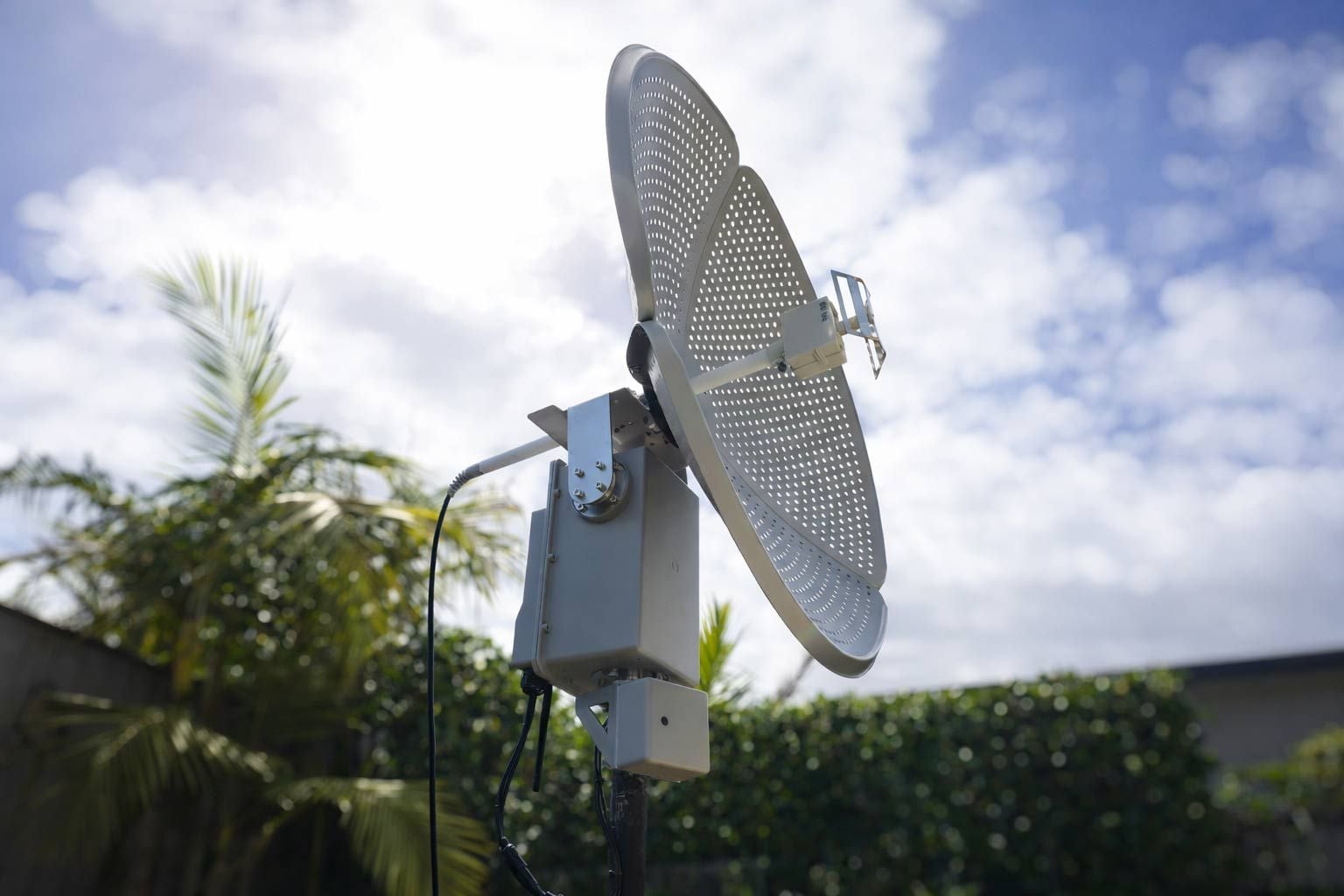
Discovery Drive integrates with commonly used satellite tracking software through a rotctl-compatible network interface, allowing automatic control from applications such as SatDump, GPredict, and Look4Sat. It also supports USB serial control using the EasyComm II protocol via Hamlib, while a browser-based web interface provides direct manual control and system configuration.
Following the conclusion of the campaign, Discovery Drive is available for pre-order through Crowd Supply at a post-campaign price of $799. KrakenRF has indicated a manufacturing timeline of approximately two months, followed by an additional one to two months for fulfillment and delivery.
Additional information is available at https://www.crowdsupply.com/krakenrf/discovery-drive.
[ANS thanks KrakenRF for the above information]
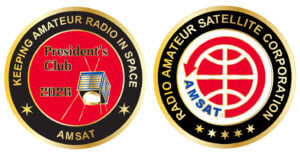
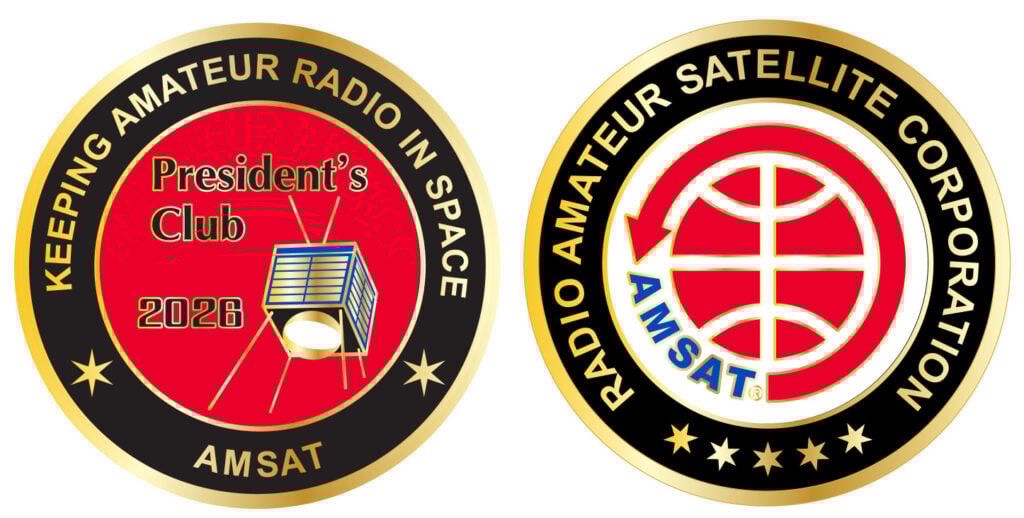
The 2026 Coins Are Here! Help Support GOLF-TEE and Fox-Plus.
Annual memberships start at only $120.
Join the AMSAT President’s Club today and help Keep Amateur Radio in Space!
https://www.amsat.org/join-the-amsat-presidents-club/
Changes to AMSAT TLE Distribution for April 24, 2026
Two Line Elements or TLEs, often referred to as Keplerian elements or keps in the amateur community, are the inputs to the SGP4 standard mathematical model of spacecraft orbits used by most amateur tracking programs. Weekly updates are completely adequate for most amateur satellites. TLE bulletin files are updated daily in the first hour of the UTC day. New bulletin files will be posted immediately after reliable elements become available for new amateur satellites. More information may be found at https://www.amsat.org/keplerian-elements-resources/.
+ This week there are no additions or deletions to the AMSAT TLE distribution.
[ANS thanks Joe Fitzgerald, KM1P, AMSAT Orbital Elements Manager, for the above information]
ARISS News
Amateurs and others around the world may listen in on contacts between amateurs operating in schools and allowing students to interact with astronauts and cosmonauts aboard the International Space Station. The downlink frequency on which to listen is 145.800 MHz worldwide.
Scheduled Contacts
+ Recently Completed
University of Bordeaux (IUT de Bordeaux), GEII department, Gradignan, France, direct via F5KBW
The ISS callsign was scheduled to be OR4ISS
The scheduled crewmember was Sophie Adenot KJ5LTN
The ARISS mentor was F6ICS
Contact was successful: Mon 2026-04-20 08:12:45 UTC
Congratulations to the University of Bordeaux students, Sophie, mentor F6ICS, and ground station F5KBW!
Watch HamTV and Livestream at http://live.ariss.org/hamtv http://live.ariss.org
Diamond Harbour School, Christchurch, New Zealand, telebridge via IK1SLD
The ISS callsign was scheduled to be OR4ISS
The scheduled crewmember was Jack Hathaway KJ5NIV
The ARISS mentor was VK4KHZ
Contact was successful: Mon 2026-04-20 09:51:10 UTC
Congratulations to the Diamond Harbour School students, Jack, mentor VK4KHZ, and telebridge IK1SLD!
ASU Preparatory STEM Academy, Mesa, AZ, direct via WB7TJD
The ISS callsign was scheduled to be NA1ISS
The scheduled crewmember was Chris Williams KJ5GE
The ARISS mentor was K4RGK and KM4YHZ
Contact was successful: Thu 2026-04-23 16:52:04 UTC
Congratulations to the ASU Preparatory STEM Academy students, Chris, and mentors K4RGK and KM4YHZ!
Watch the Livestream at https://live.ariss.org/
+ Upcoming Contacts
None currently scheduled.
Many times, a school makes a last-minute decision to do a Livestream or runs into a last-minute glitch requiring a change of the URL, but we at ARISS may not get the URL in time for publication. You can always check https://live.ariss.org/ to see if a school is Livestreaming.
As always, if there is an EVA, a docking, or an undocking; the ARISS radios are turned off as part of the safety protocol.
The crossband repeater remains configured in the Columbus Module (145.990 MHz up {PL 67} & 437.800 MHz down). If a crewmember decides to pick up the microphone and turn up the volume, you may hear them on the air—so keep listening, as you never know when activity might occur.
Kenwood D710GA in the Zvezda Service Module – Call sign RS0ISS. Please note we’re still in the process of troubleshooting and testing this radio. HamTV in the Columbus Module is configured for scheduled digital amateur television operations on 2395.00 MHz.
Note, all times are approximate. It is recommended that you do your own orbital prediction or start listening about 10 minutes before the listed time.
The latest information on the operation mode can be found at https://www.ariss.org/current-status-of-iss-stations.html
The latest list of frequencies in use can be found at https://www.ariss.org/contact-the-iss.html
[ANS thanks Charlie Sufana, AJ9N, one of the ARISS operation team mentors for the above information]
AMSAT Ambassador Activities
AMSAT Ambassadors provide presentations, demonstrate communicating through amateur satellites, and host information tables at club meetings, hamfests, conventions, maker faires, and other events.
AMSAT Ambassador Clint Bradford, K6LCS, says,
“Think a 75-minute presentation on “working the easy satellites” would be appropriate for your club or event? Let me know by emailing me at k6lcsclint [at] gmail [dot] com or calling me at 909-999-SATS (7287)!”
Clint has NEVER given the exact same show twice: EACH of the 150+ presentations so far has been customized/tailored to their audiences.
Scheduled Events
Dayton Hamvention – May 15 thru May 17, 2026
Greene County Fair and Expo Center
120 Fairground Road
Xenia, OH 45385
https://hamvention.org/
44th AMSAT Space Symposium and Annual Membership Meeting – October 8 thru 11, 2026
Crowne Plaza JAX Airport
14670 Duval Road
Jacksonville, FL 32218
For more information go to: https://www.amsat.org/ambassador/
[ANS thanks Bo Lowrey, W4FCL, Director – AMSAT Ambassador Program, for the above information]
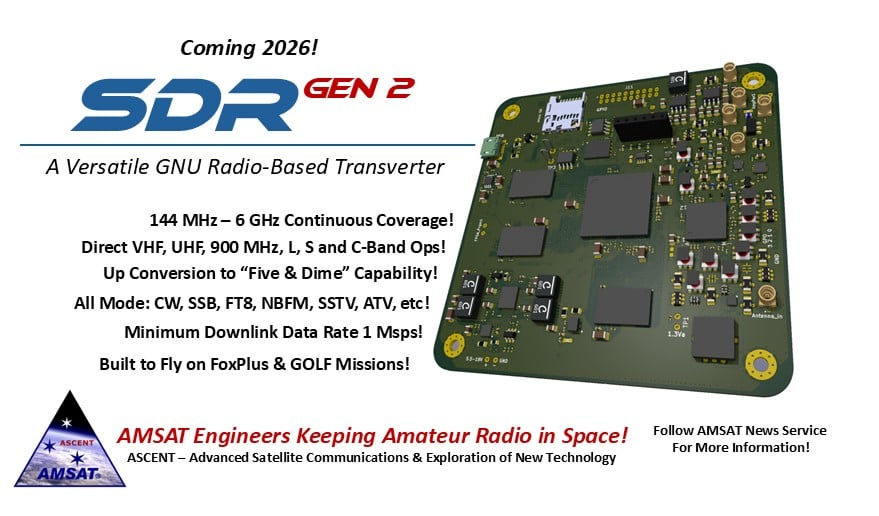
Satellite Shorts from All Over
+ CelesTrak has reminded users that it transitioned to a nonprofit organization five years ago and moved its services to the celestrak.org domain at that time. While requests to the legacy .com domain have been redirected since then, the SSL certificate for the .com site expired on April 12, 2026. As a result, software or scripts still pointing to the .com domain may now fail or produce security warnings. Users are advised to update their configurations to use the .org domain to ensure continued access to CelesTrak data services. CelesTrak remains focused on providing free orbital data and tools to the space and satellite community. The organization also encourages users to support its mission through voluntary contributions. (ANS thanks CelesTrak for the above information)
+ The Federal Aviation Administration has grounded Blue Origin’s New Glenn following a launch incident on Sunday from Cape Canaveral. The rocket performed nominally during ascent but failed to place its payload, AST SpaceMobile’s BlueBird 7 satellite, into the intended orbit. The spacecraft had been scheduled to deploy about 75 minutes after liftoff into a 286 miles (460 kilometers) circular orbit at a 49.4 degree inclination following a second upper stage burn. The FAA classified the event as a “mishap” and has opened an investigation to determine the root cause and ensure public safety before allowing a return to flight. According to available telemetry, the payload reached only about a 95 miles (153 kilometers) orbit instead of the planned altitude, rendering it unsustainable. Despite the anomaly, Blue Origin successfully landed and recovered the booster for the first time, supporting future reusability and higher launch cadence. (ANS thanks Engadget.com for the above information)
+ NASA engineers at Jet Propulsion Laboratory commanded Voyager 1 to shut down its Low-Energy Charged Particles experiment on April 17 in an effort to conserve dwindling power and extend the spacecraft’s mission. The instrument had operated nearly continuously since launch in 1977, providing valuable measurements of ions, electrons, and cosmic rays in interstellar space beyond the heliosphere. Powered by a radioisotope thermoelectric generator that loses about 4 watts per year, Voyager 1 now faces critically low power margins after nearly five decades in operation. A recent drop in power during a routine maneuver raised concern that the spacecraft’s fault protection system could automatically shut down additional systems, prompting the team to act preemptively. Two science instruments remain active, continuing to return unique data from a region of space no other spacecraft has reached. Engineers expect the shutdown to provide about a year of additional operation as they prepare further power-saving measures, including a planned system reconfiguration later this year. (ANS thanks NASA for the above information)
+ SpaceX has completed a full-duration static fire test of its next-generation Starship Version 3 upper stage ahead of the vehicle’s first flight. The test, conducted on April 14, involved firing the engines while the rocket remained secured to the launch pad, demonstrating readiness for upcoming operations. Starship Flight 12, targeted for early to mid-May, will be the first launch of the larger and more powerful Version 3 configuration. When fully stacked, the vehicle stands about 408 feet (124.4 meters) tall and features upgraded Raptor engines capable of delivering significantly greater performance. The new variant is designed to carry more than 100 tons to low Earth orbit, a substantial increase over the approximately 35-ton capacity of the previous Version 2. NASA is now preparing for its Artemis 3 mission, which will test docking operations in Earth orbit between the Orion spacecraft and one or both contracted lunar landers, including Starship and Blue Origin’s Blue Moon. (ANS thanks Space.com for the above information)
Join AMSAT today at https://launch.amsat.org/
In addition to regular membership, AMSAT offers membership to:
- Societies (a recognized group, clubs or organization).
- Students enrolled in at least half-time status are eligible for free membership to age 25.
- Memberships are available for annual and lifetime terms.
Contact info [at] amsat.org for additional membership information.
73 and remember to help Keep Amateur Radio in Space!
This week’s ANS Editor,
Mitch Ahrenstorff, ADØHJ
mahrenstorff [at] amsat.org
ANS is a service of AMSAT, the Radio Amateur Satellite Corporation, 712 H Street NE, Suite 1653, Washington, DC 20002
AMSAT is a registered trademark of the Radio Amateur Satellite Corporation.