
AMSAT News Service
ANS-067 — March 8, 2026
In this edition:
* Kairos No. 3 Launch Failure Destroys NUTSAT-3
* Ten-Koh 2 to be Deployed Soon
* GridMasterMap Satellite Top 100 Rovers March 2026 Rankings
* VUCC Satellite Standing March 2026
* Cambodian Students Blast Off With Satellite Training
* Changes to AMSAT-NA TLE Distribution
* NASA Reveals Astronaut Who Required Evacuation From ISS
* ARISS News
* AMSAT Ambassador Activities
* Satellite Shorts From All Over
The AMSAT News Service bulletins are a free, weekly news and information service of AMSAT, the Radio Amateur Satellite Corporation. ANS publishes news related to Amateur Radio in Space including reports on the activities of a worldwide group of Amateur Radio operators who share an active interest in designing, building, launching and communicating through analog and digital Amateur Radio satellites.
The news feed on http://www.amsat.org publishes news of Amateur Radio in Space as soon as our volunteers can post it.
Please send any amateur satellite news or reports to: ans-editor [at] amsat.org
Sign up for free e-mail delivery of the AMSAT News Service Bulletins via the ANS List; to join this list see: https://mailman.amsat.org/postorius/lists/ans.amsat.org/
Kairos No. 3 Launch Failure Destroys NUTSAT-3
The third time was not the charm for Space One’s Kairos rocket.
Kairos launched for the third time ever on Thursday, March 5, lifting off from Space One’s Spaceport Kii in Wakayama Prefecture at 02:10 UTC (11:10 a.m. local time in Japan). But it was all over about two minutes later.
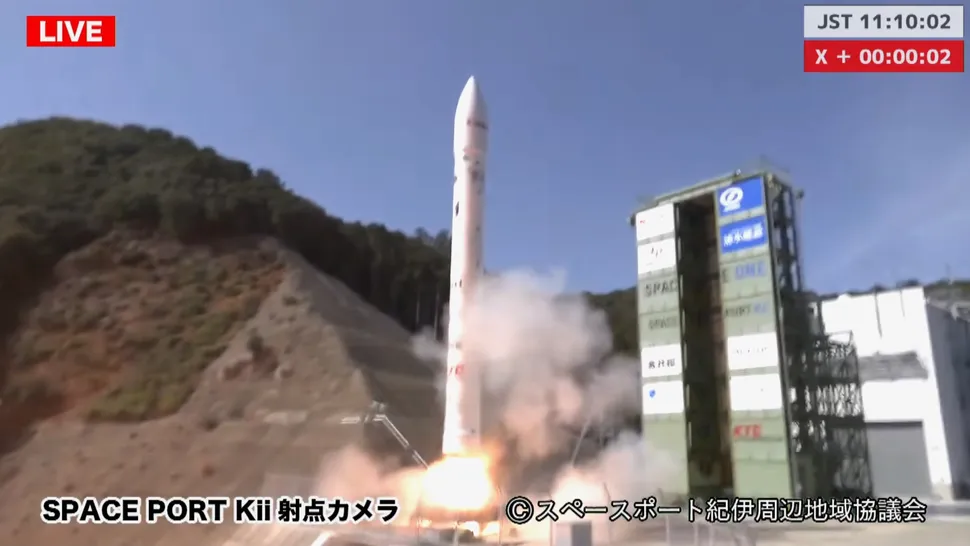
Space One’s Kairos rocket launches on its third-ever mission on March 4, 2026 from Spaceport Kii.
Space One terminated the flight about two minutes after liftoff. (Image credit: Space One)
“Kairos No. 3 was launched on March 5, 2026, at 11:10:00 a.m., but we determined that mission success was difficult and implemented flight termination measures,” Tokyo-based Space One said via X on Wednesday evening (in Japanese; translation by X).
Among the Kairos No. 3 payloads was NUTSAT-3, a 3U CubeSat created with support from National Formosa University and dedicated to amateur radio service. The satellite, was designed to provide FM voice repeater, APRS, and telemetry services to the global amateur satellite community.
In addition to the amateur radio mission, the NUTSAT-3 project was to have actively engaged students in mission data analysis, RF design performance of satellite radio communications, and community participation by encouraging public engagement through open telemetry data.
[ANS thanks Space.com and The International Amateur Radio Union for the above information. Read the full Space.com story at https://www.space.com/space-exploration/private-spaceflight/japan-startup-space-one-kairos-third-launch.]
The 2026 Coins Are Here! Help Support GOLF-TEE and FoxPlus.
Annual memberships start at only $120.
Join the AMSAT President’s Club today and help Keep Amateur Radio in Space!
https://www.amsat.org/join-the-amsat-presidents-club/
Ten-Koh 2 to be Deployed Soon
A Japanese amateur radio satellite, launched to the International Space Station (ISS) last October, will soon be deployed in a higher orbit.
After delivering about 12,000 pounds of supplies, scientific investigations, hardware, and other cargo to the ISS for NASA and its international partners, JAXA’s (Japan Aerospace Exploration Agency’s) uncrewed HTV-X1 cargo spacecraft departed the ISS on Friday, March 6. The spacecraft arrived at the space station on Oct. 29, 2025, after launching Oct. 25 on an H3 rocket from Japan’s Tanegashima Space Center.
The HTV-X1 spacecraft will boost itself to a 500km circular orbit where it will remain for more than three months acting as a scientific platform for JAXA’s experiments.
After attaining this higher orbit, HTV-X1 will deploy Ten-Koh 2, a 6U cubesat constructed by Nihon University carrying a variety of amateur radio experiments. These will include:
- A linear transponder, developed by JAMSAT, that will operate two days each week (schedule to be announced). Transponder frequencies that have been coordinated with the International Amateur Radio Union (IARU) feature an uplink in the range 145.895-145.935 MHz with downlink 435.875-435.915 MHz.
- Digitalker with pre-loaded audio to be transmitted at 435.895 MHz.
- Transmission of pre-loaded digital images created in cooperation with students from the Faculty of Arts, also at 435.895 MHz.
- Demonstration of microwave band communication technology at 5.8 GHz in the microwave band.
- Tests of high-speed data transmission at 38.4 kbps in 4FSK.
Following the deorbit command, HTV-X1 will dispose of several thousand pounds of trash from the ISS during re-entry into Earth’s atmosphere, where it will burn up harmlessly. However, Ten-Koh 2 is expected to remain in orbit and active for approximately one year to 18 months.
[ANS thanks NASA and IARU for the above information.]
GridMasterMap Satellite Top 100 Rovers March 2026 Rankings
The March 2026 rankings for the Top 100 Rovers (Mixed LEO/MEO/GEO) in satellite operations, as determined by @GridMasterMap on X (formerly Twitter), have been released. The ranking is determined by the number of grids and DXCC entities activated, taking into account only those grids where a minimum number of QSOs logged on the gridmaster.fr website have been validated by a third party. Grid numbers do not directly reflect the exact number of activations. Satellite operators are encouraged to upload their LoTW satellite contacts to https://gridmaster.fr in order to provide more accurate data.
Gridmaster Top Rovers for March 2026 (Updated: 2026-02-06)
| 1 | ND9M | 26 | WD9EWK | 51 | KE0WPA | 76 | HB9GWJ |
| 2 | NJ7H | 27 | KX9X | 52 | WD5GRW | 77 | VA7LM |
| 3 | UT1FG | 28 | KG5CCI | 53 | KE0PBR | 78 | DL4EA |
| 4 | JA9KRO | 29 | DJ8MS | 54 | XE3DX | 79 | N8RO |
| 5 | N5UC | 30 | N5BO | 55 | BA8AFK | 80 | SP5XSD |
| 6 | F5VMJ | 31 | ON4AUC | 56 | LU4JVE | 81 | N6UTC |
| 7 | DL6AP | 32 | K8BL | 57 | W7WGC | 82 | N4UFO |
| 8 | DP0POL | 33 | KE4AL | 58 | PR8KW | 83 | VE7PTN |
| 9 | WI7P | 34 | KB5FHK | 59 | JK2XXK | 84 | PT2AP |
| 10 | K5ZM | 35 | AC0RA | 60 | EA4NF | 85 | VE1VOX |
| 11 | OE3SEU | 36 | PA3GAN | 61 | EB1AO | 86 | AA8CH |
| 12 | WY7AA | 37 | F4BKV | 62 | XE1ET | 87 | KB2YSI |
| 13 | LU5ILA | 38 | KI0KB | 63 | N6DNM | 88 | KI7UXT |
| 14 | N6UA | 39 | JO2ASQ | 64 | W8LR | 89 | AF5CC |
| 15 | HA3FOK | 40 | KI7UNJ | 65 | W1AW | 90 | KJ7NDY |
| 16 | OH2UDS | 41 | VA3VGR | 66 | KI7QEK | 91 | BI1MHK |
| 17 | W5PFG | 42 | VE3HLS | 67 | SM3NRY | 92 | PT9BM |
| 18 | AK8CW | 43 | BG7QIW | 68 | KE9AJ | 93 | FG8OJ |
| 19 | N9IP | 44 | LA9XGA | 69 | F4DXV | 94 | BG5CZD |
| 20 | AD0DX | 45 | HJ5LVR | 70 | VE1CWJ | 95 | YU0W |
| 21 | AD0HJ | 46 | VK5DG | 71 | AA5PK | 96 | PU4CEB |
| 22 | DL2GRC | 47 | N7AGF | 72 | AD7DB | 97 | W8MTB |
| 23 | N4AKV | 48 | DF2ET | 73 | PU6JBN | 98 | N4DCW |
| 24 | ND0C | 49 | K7TAB | 74 | KM4LAO | 99 | PS8BR |
| 25 | BA1PK | 50 | JL3RNZ | 75 | M1DDD | 100 | WA9JBQ |
[ANS thanks @GridMasterMap for the above information.]
LIMITED TIME OFFER!!!
AMSAT is offering a limited-time promotion for new and renewing members
that includes a free digital copy of Getting Started with Amateur Satellites.
The promotion is being offered as AMSAT begins the 2026 membership year.
Anyone who joins or renews their AMSAT membership
during the promotional period will receive a download link
for the latest edition of Getting Started with Amateur Satellites
in their membership confirmation email. JOIN TODAY at
https://launch.amsat.org/
(Remember! Students join for FREE!)
VUCC Satellite Standing March 2026
VUCC Satellite Award/Endorsement Change Summary for February 01, 2026 to February 28, 2026.
| Callsign | Feb | Mar |
|---|---|---|
| PY2PIM | 1200 | 1250 |
| MI6GTY | 1201 | 1202 |
| JN2QCV | 1159 | 1180 |
| IK1IYU | 508 | 900 |
| WD9EWK(DM43) | 779 | 781 |
| WA3YDZ | 353 | 401 |
| IN3EQZ | 268 | 316 |
| DH0GSU | 204 | 250 |
| IW3SSA | New | 217 |
| N6UTC(DM14) | 128 | 150 |
| PT2VM | 126 | 150 |
| LU4FW | New | 147 |
| WB9PNU | 115 | 121 |
| WD9EWK(DM13) | 116 | 119 |
| AD7OV | New | 100 |
| BI8SSW | New | 100 |
| KE5JXC | New | 100 |
Congratulations to the new VUCC Satellite holders.
IW3SSA
LU4FW
AD7OV
BI8SSW
KE5JXC
IW3SSA is first VUCC Satellite holder from JN66
AD7OV is first VUCC Satellite holder from DN50
BI8SSW is first VUCC Satellite holder from OL15
KE5JXC is first VUCC Satellite holder from EL39
No DXCC Standings this month, ARRL hasn’t updated it to March yet.
[ANS thanks Jon Goering, N7AZ, for the above information.]
Want to fly the colors on your own grid expedition?
Get your AMSAT car flag and other neat stuff from our Zazzle store!
25% of the purchase price of each product goes towards
Keeping Amateur Radio in Space
https://www.zazzle.com/amsat_gear
Cambodian Students Blast Off With Satellite Training
Although space technology may have not been officially introduced into the Kingdom’s standard curriculum, the topic is taking center stage at the National Polytechnic Institute of Cambodia (NPIC), at the 2nd Session of the NPIC SCT Event: QO-100 and LEO Satellite Training, igniting a passion for space communication among students.
The training, from February 26 to March 3, is transforming the campus into a hub of innovation.
Building on their past success of a 12,076-kilometre transmission to Antarctica via the QO-100 satellite, this year’s training elevates the challenge by focusing on Low Earth Orbit (LEO) satellites.
Students are actively engaged in hands-on learning, constructing and utilizing homemade antenna systems to track these fast-moving satellites across the sky, according to organizers.
International specialists from Japan, France and Australia are providing mentorship, guiding students through the complexities of installing ground stations and communicating with a variety of satellites, including the geostationary QO-100 and LEO satellites like RS-44 and SO-50.
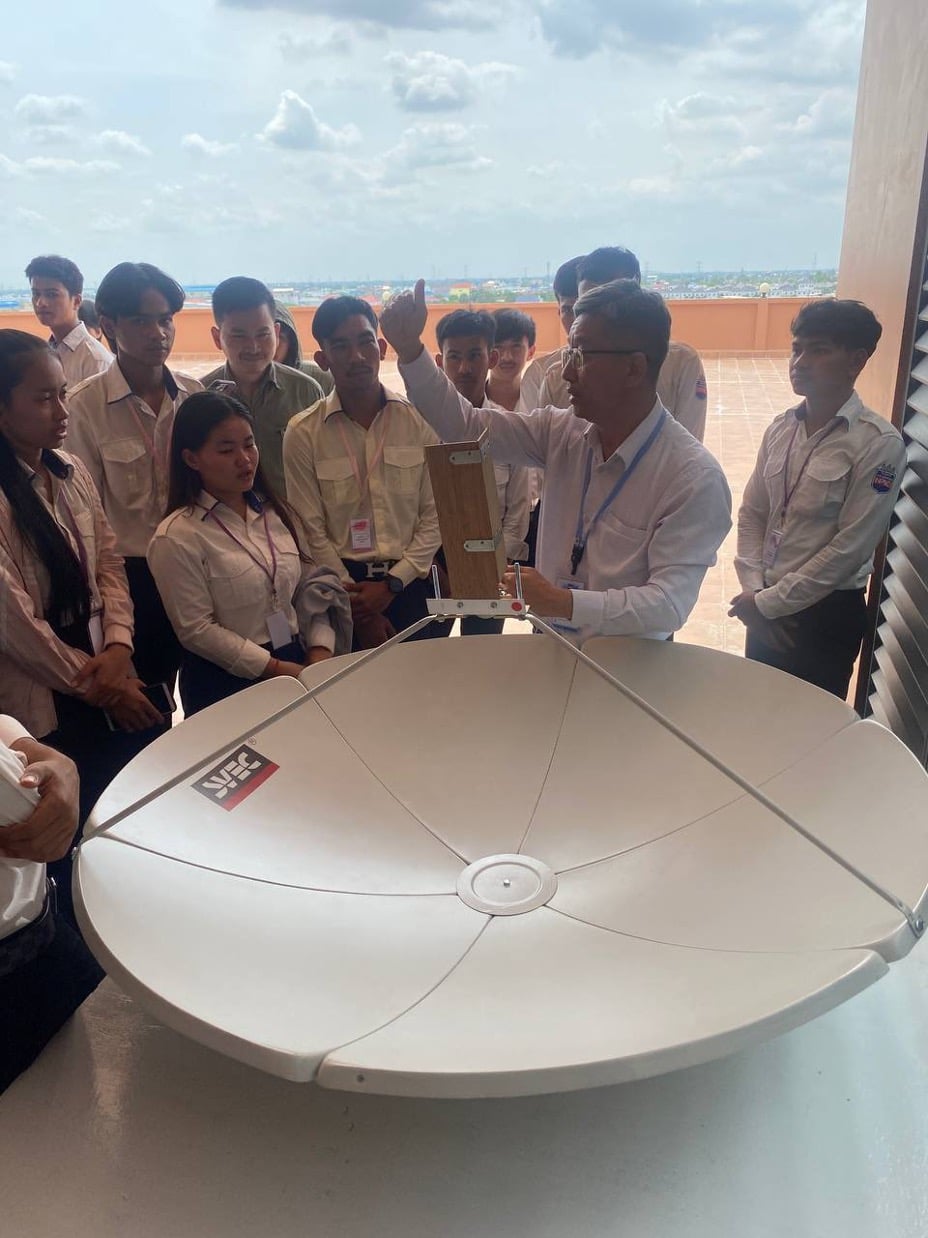
Space and satellite training during the first session at NPIC, held last year. Credit: NPIC and The Phnom Penh Post.
“I wanted to show Cambodian students that space technology is accessible. Watching them successfully track an LEO satellite today proves that our youth are ready for the future,” said Jorge Paulo, a French Marine Electronics and Telecommunications System expert.
Mori Mikio, an amateur radio satellite technician from Japan, emphasized the event’s impact, highlighting how the real success is not just in the technical milestones, but in witnessing the passion of the participants.
“Seeing students successfully track LEO satellites with homemade antennas is a powerful reminder of why this event exists,” he said.
Reth Sengvisoth, one of the organising committee members, shared his satisfaction with their efforts. He said the months of planning and coordination went into bringing this international training to life.
[ANS thanks The Phnom Penh Post for the above information. Read the full article at https://www.phnompenhpost.com/national/cambodian-students-blast-off-with-satellite-training-programme-at-npic.]
AMSAT Remove Before Flight Key Tags Now Available
Yes, These are the Real Thing!
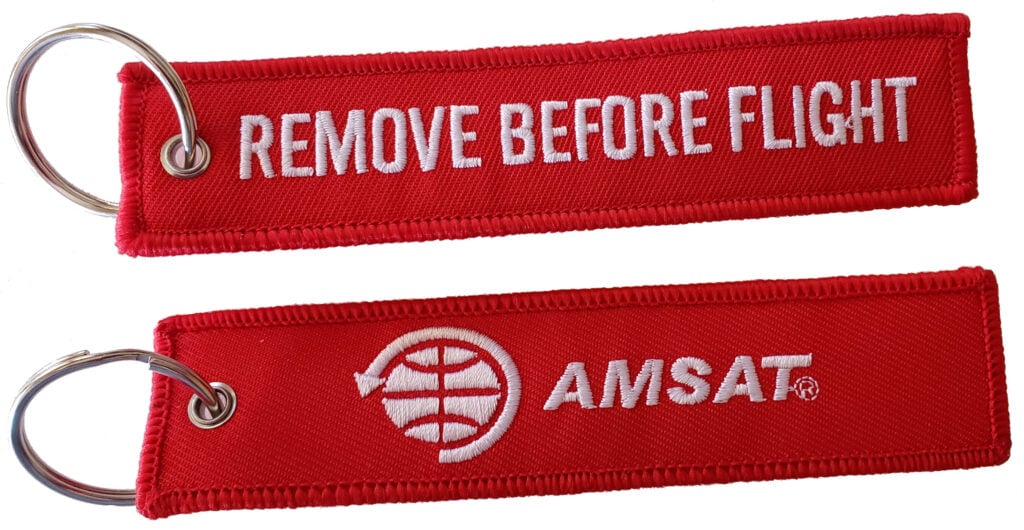
Your $20 Donation Goes to Help Fly a FoxPlus Satellite
Includes First Class Postage (Sorry – U.S. Addresses Only)
Order Today at https://www.amsat.org/product/amsat-remove-before-flight-keychain
Changes to AMSAT-NA TLE Distribution for March 6
Two Line Elements or TLEs, often referred to as Keplerian elements or keps in the amateur community, are the inputs to the SGP4 standard mathematical model of spacecraft orbits used by most amateur tracking programs. Weekly updates are completely adequate for most amateur satellites. TLE bulletin files are updated daily in the first hour of the UTC day. New bulletin files will be posted immediately after reliable elements become available for new amateur satellites. More information may be found at https://www.amsat.org/keplerian-elements-resources/.
URGENT MESSAGE: From TS Kelso of CelesTrak “[The US Space Force 18th Space Defense Squadron] will run out of 5-digit catalog numbers at 69999 not 99999, which is estimated to occur around 2026‑07‑20 (we’re currently at 68014). At that point, newly cataloged objects will have 6-digit catalog numbers of 100000+ and GP data will not be available for them using the TLE format. CelesTrak developed new formats that removed this limitation (and finally fixed the Y2K problem) in May 2020 and immediately began providing GP data in those formats for software developers. The same limitations apply to the legacy fixed-field SATCAT. Follow @TSKelso on Bluesky for the latest updates, tutorials, and changes as we approach this transition. Spread the word!”
AMSAT is presently alpha testing dissemination of orbital data aka “General Perturbations Data” or “GP Data” in formats that do not have the 5 digit object number limitation and will solicit public help for beta testing in April 2026. Many software packages used by hams already accept at least one of the new formats, and we would like to work through any issues before new satellites arrive without TLE sets. AMSAT will continue to disseminate TLE data for all satellites cataloged below 69999 indefinitely.
NOAA Cat ID 67291 has been renamed “RS95S (QMR-KWT-2)”
The following satellites have been removed from this week’s AMSAT TLE Distribution:
RSP-03 NORAD Cat ID 65732 Decayed from orbit on or about 16 February 2026
BOTAN NORAD Cat ID 65942 Decayed from orbit on or about 03 March 2026
MO-122 NORAD Cat ID 60209 End of mission, last telemetry 25 August 2025
CEVROSAT1 NORAD Cat ID 66309 End of mission, last telemetry 09 November 2025
CO-57 NORAD Cat ID 27848 End of mission, date unknown
CO-58 NORAD Cat ID 28895 End of mission, date unknown
EO-80 NORAD Cat ID 40032 End of mission, date unknown
FloripaSat 1 NORAD Cat ID 44885 End of mission, date unknown
[ANS thanks Joe Fitzgerald, KM1P, AMSAT Orbital Elements Manager for the above information.]

NASA Reveals Astronaut Who Required Evacuation From ISS
NASA astronaut Mike Fincke, KE5AIT, Crew-11 pilot and commander of the International Space Station’s (ISS) Expedition 74, has revealed that it was his medical issue that prompted the evacuation of the four Crew-11 astronauts from the space station in January.
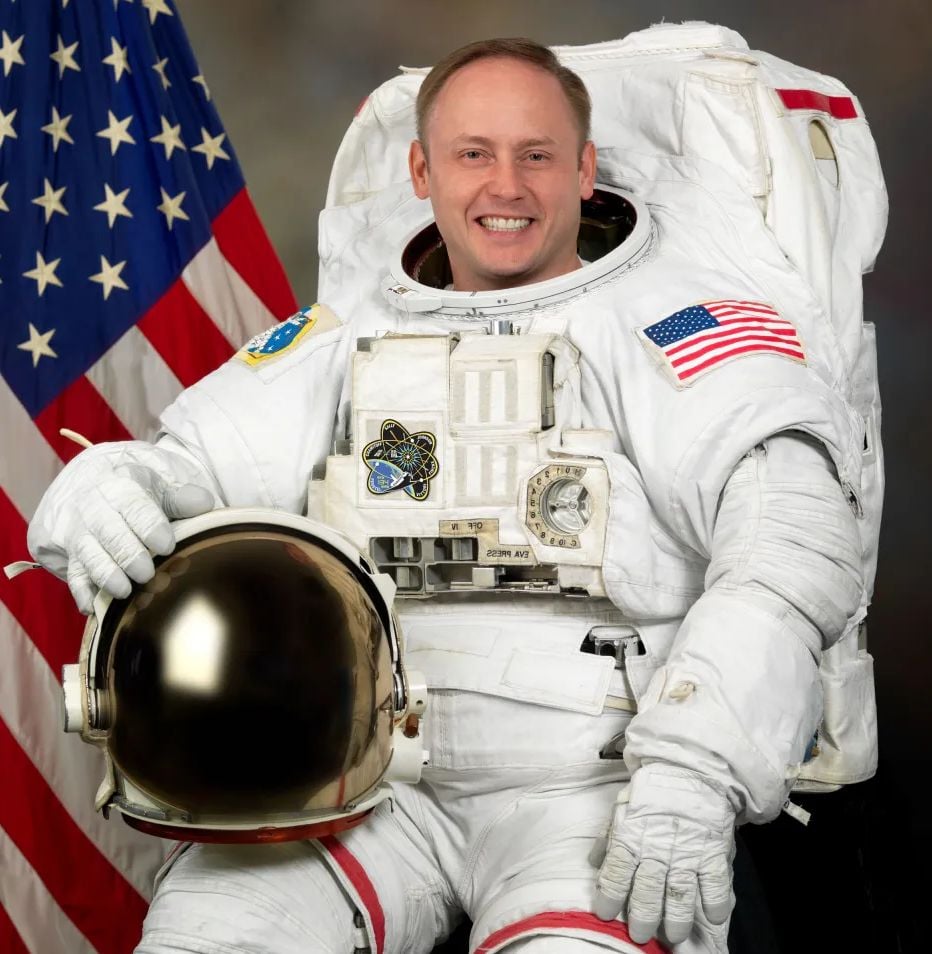
NASA astronaut Mike Fincke, KE5AIT (Credit: NASA)
The exact nature of his ailment remains undisclosed, but Fincke’s statement clarified that the issue, while not considered an emergency, required “advanced medical imaging not available on the space station.” As a result, Fincke and his crewmates — NASA astronaut Zena Cardman, KJ5CMN, Japanese space agency astronaut Kimiya Yui, KG5BPH, and Roscosmos cosmonaut Oleg Platonov — returned to Earth aboard the Crew Dragon “Endeavour” on Jan. 15, about a month earlier than originally planned.
The issue arose on Jan. 7, while Fincke and Cardman were preparing for an upcoming spacewalk. “The agency is monitoring a medical concern with a crew member that arose Wednesday afternoon aboard the orbital complex,” NASA officials said in an emailed statement on Jan. 7, declining to elaborate on the nature of that concern or the astronaut it affected. Then, on Jan. 8, the agency announced that Crew-11 would end early so the issue could be addressed here on Earth.
Crew-11 splashed down aboard Endeavour in the Pacific Ocean, off the coast of San Diego, on Jan. 15, leaving a skeleton crew of three aboard the ISS.
SpaceX’s Crew-12 mission was originally slated to launch in mid-February, with a typical handover period between them and Crew-11 expected after their arrival in low Earth orbit, allowing the newcomers time to acclimate to microgravity and life aboard the station. Efforts by SpaceX and NASA allowed for an earlier target date of their Falcon 9 launch aboard Crew Dragon “Freedom,” which lifted off Feb. 13 and returned the ISS to its regular crew complement of seven.
[ANS thanks Space.com for the above information. See the full article at https://www.space.com/space-exploration/human-spaceflight/nasa-reveals-the-astronaut-who-required-1st-medical-evacuation-from-the-international-space-station.]
ARISS NEWS

Amateurs and others around the world may listen in on contacts between amateurs operating in schools and allowing students to interact with astronauts and cosmonauts aboard the International Space Station. The downlink frequency on which to listen is 145.800 MHz worldwide.
RECENTLY COMPLETED
Escola Naval (Brazilian Navy Academy), Rio de Janeiro, Brazil, direct via PY1AA
The ISS callsign was NA1SS
The scheduled crewmember was Sophie Adenot, KJ5LTN
The ARISS mentor was VE3TBD
Contact was successful: Mon 2026-03-02 12:17:25 UTC 49 degrees maximum elevation
Congratulations to the Escola Naval students, Sophie (her first ever ARISS contact), mentor VE3TBD, and ground station PY1AA!
Watch for Livestream at https://www.youtube.com/live/5mA2OppSV5w?si=EwosjCk9Ckv0qcvs
St Joseph’s Primary School, Bombala, NSW, Australia, telebridge via VK6MJ
The ISS callsign was TBD
The scheduled crewmember was Jack Hathaway, KJ5NIV
The ARISS mentor was VK4KHZ
Contact was successful: Thu 2026-03-05 08:53:18 UTC 32 degrees maximum elevation
Congratulations to the St Joseph’s Primary School students, Jack (his first ever ARISS contact), mentor VK4KHZ, and telebridge VK6MJ!
UPCOMING
TBD
The crossband repeater continues to be active (145.990 MHz up {PL 67} & 437.800 MHz down). If any crewmember is so inclined, all they have to do is pick up the microphone, raise the volume up, and talk on the crossband repeater. So give a listen, you just never know.
Currently running packet operations at 437.825 MHz. Please note we’re still in the process of troubleshooting and testing this radio. Feel free to check out status reports at https://ariss-usa.org/ARISS_APRS/.
Ham TV is currently transmitting a test signal at 2395.00 MHz. For more information, visit the ARISS Ham TV Live site at https://live.ariss.org/hamtv/.
As always, if there is an EVA, a docking, or an undocking; the ARISS radios are turned off as part of the safety protocol.
Note, all times are approximate. It is recommended that you do your own orbital prediction or start listening about 10 minutes before the listed time.
The latest information on the operation mode can be found at https://www.ariss.org/current-status-of-iss-stations.html
The latest list of frequencies in use can be found at https://www.ariss.org/contact-the-iss.html
[ANS thanks Charlie Sufana, AJ9N, one of the ARISS operation team mentors for the above information]
AMSAT Ambassador Activities
AMSAT Ambassadors provide presentations, demonstrate communicating through amateur satellites, and host information tables at club meetings, hamfests, conventions, maker faires, and other events.
March 21, 2026
Midwinter Madness Hamfest 2026
Maple Grove Radio Club
Buffalo Civic Center
1306 County Rd 134
Buffalo, Minnesota 55313
https://k0ltc.org/midwinter-madness/
KØJM, ADØHJ, KEØPBR
April 11, 2026
Tucson Area Spring Hamfest
Radio Society of Tucson
Calvary Tucson Church
8711 East Speedway
Tucson, AZ 85710
https://k7rst.club/
N1UW
[ANS thanks Bo Lowrey, W4FCL, Director – AMSAT Ambassador Program, for the above information.]
Satellite Shorts From All Over
+ In a statement on March 3, the Russian space agency Roscosmos said that its engineers have repaired a badly damaged launch pad at the Baikonur cosmodrome ahead of schedule, averting a potentially longer-term problem for supplying the International Space Station (ISS). The agency said a Progress cargo capsule is now scheduled to blast off to the ISS on March 22. The facility suffered a still unexplained mishap last November during the launch of a Soyuz capsule carrying two Russians and one American to the orbiting station. The pad is the only location where Russia can launch its manned Soyuz capsules, which are a mainstay transport and cargo vehicle for the station. (ANS thanks Radio Free Europe for the above information.)
+ SpaceX launched the 600th Starlink satellite of 2026 during predawn Falcon 9 rocket flight from Cape Canaveral on March 4. The Starlink 10-40 mission added another 29 broadband internet satellites into low Earth orbit. (ANS thanks SpaceflightNow for the above information. See the full article at https://spaceflightnow.com/2026/03/03/live-coverage-spacex-to-launch-29-starlink-satellites-on-falcon-9-rocket-from-cape-canaveral-10/.)
+ NASA announced on February 19 that it has reclassified Starliner’s Crew Flight Test (CFT) as a “Type A mishap” — the most serious kind, in the same category as the space shuttle Challenger and Columbia tragedies. CFT launched on June 5, 2024, sending NASA astronauts Suni Williams, KD5PLB, and Butch Wilmore to the International Space Station (ISS) for a planned 10-day stay. Starliner reached the orbiting lab safely. On the way, however, the spacecraft suffered multiple thruster failures and temporarily lost “six degree of freedom” control — the ability to precisely maintain its desired orientation and trajectory. NASA prolonged the orbital stay of Williams and Wilmore multiple times to study Starliner’s thruster issues. In the end, the agency decided to bring the capsule home uncrewed, which occurred on Sept. 6. Williams and Wilmore, meanwhile, stayed aboard the ISS. They came home on a SpaceX Crew Dragon capsule in March 2025, having spent about nine months in space instead of the originally planned 10 days. Both have since retired from the agency. (ANS thanks Space.com for the above information. Read the full article at https://www.space.com/space-exploration/human-spaceflight/we-almost-did-have-a-really-terrible-day-nasa-now-says-boeings-1st-starliner-astronaut-flight-was-a-type-a-mishap.)
Join AMSAT today at https://launch.amsat.org/
In addition to regular membership, AMSAT offers membership to:
- Societies (a recognized group, clubs or organization).
- Students are eligible for FREE membership up to age 25.
- Memberships are available for annual and lifetime terms.
Contact info [at] amsat.org for additional membership information.
73 and remember to help Keep Amateur Radio in Space!
This week’s ANS Editor, Mark Johns, KØJM
mjohns [at] amsat.org
ANS is a service of AMSAT, the Radio Amateur Satellite Corporation, 712 H Street NE, Suite 1653, Washington, DC 20002